Monday, 7 May 2012

Memory and Feasibility: Why Ethnic Conflicts Happen


Janjaweed Militiamen 

Ethnic rivalries have spawned some of the most vicious conflicts of our time- the Wars of Yugoslav Succession, the Rwandan Genocide and the Second Congo War (the most deadly conflict since the end of World War II) being some of the deadliest. There have been many theories on why they happen from Robert Kaplan's idea of 'ancient hatreds' to instrumentalist accounts of ethnic groups vying for power. 

Recently, there has been an increasing recognition that both ethnic identity and nationalism are reasonably modern and very malleable. As such research into ethnic conflict has proceeded along two lines: an 'identity' stream associated with sociological ideas such as memory, the construction of identity/barriers to identity etc. and a 'feasibility' stream associated with conflict studies which looks at whether parties have the resources to commit to such conflicts. 

I want to unpack some key ideas from both lines of study, before drawing some very tentative conclusions.

'Every Foetus is a Croat': Ethno-national Identities as a Source of Conflict
I use ethnicity here to mean any group of people who identify with each other as having a common heritage, with barriers to group entry meaning anyone cannot just declare themselves a member of that group (heritages are often deeply fictitious but often involve shared myths, language, customs etc.). In ethnic conflict, the key aim of the actors who are driving for ethnic conflict (e.g. Milosevic, Tudjman etc) is to both legitimate their own violent actions and delegitimise ethnic 'others'. In constructing a frame of mind for collective action I theorise that there are three components (after Gamson): injustice, identity and agency.

Injustice
Injustice is constructed by reframing collective memory to make past events into reasons to hate the 'others', either by playing up differences or blaming events on others (e.g. Milosevic blaming bad financial circumstances on Bosnians and bringing back images of World War II Croatian-aligned fascists etc). This triggers what cognitive psychologists call “hot cognition” where language or symbols trigger an emotional response via a series of associations. I would like to note I do not mean 'collective memory' in the sense used by Carl Jung to refer to a collective unconscious- what I mean here is the social framework through which ethnically conscious individuals can organise their identity.

Milosevic Addressing the National Assembly

As previously noted in a post about the Marketplace for Ideas, Price in his ‘Market for Loyalties’ propounded the strategy of attempting to monopolise the construction of collective memory by dominating media discourses, where a government may use “regulation of communications to organise a cartel of imagery”. It has often been a strategy of national governments in particular (but also other groups e.g. the Interahamwe in Rwanda) to monopolise the media in order to induce a sort of 'war psychosis' whereby a group will feel they are surrounded by enemies who are trying to wipe them out. 

Identity
Actors may also seek to emphasise ethnic difference, for example by forms of 'state chauvinism', including enshrining a national religion or language, or as suggested by this section's title, banning abortion to create more "fighting Croats". Often, previous economic differences are emphasised e.g. between the Tutsis and Hutus in Rwanda. For example, the Croatian government actively tried to turn Croatians on their neighbours, especially in areas outside of the Croatian republic proper, which had historically been harmonious.

Agency
Stressing agency is also a vital factor. Governments or rebel groups often imply a sense of being able to solve the ‘problem’ as a group and deny the “immutability of some undesirable situation” (Gamson). They seek to construct the collective memory to express the embodiment of individual agency only through the collective of the nation. Appeals to collective solidarity are particularly common, for example Serb People’s Council calls on the Serb people to resist the terror of the Ustashoid government” and “Protecting Serbs from the vampirical Ustashe” (Ustashe being the Croatian World War II Nazi-aligned government).

In all, ethnic difference is clearly an important factor and is often constructed around injustice, identity and agency. Interestingly, in a 2009 study by Collier it was found that ethnic polarisation was the only socio-political variable found to be a predictor of civil conflicts of any kind.

'A Spiral of Silence': Feasibility and Conflict
 However, this isn't a complete explanation for why ethnic conflict goes on- it does little to discuss what the incentives of certain groups to actually declare war might be. So, I am going to borrow from a broader series of studies on civil conflict to discuss how feasibility, that is having the resources to actually fight a war is important to understanding even ethnic conflicts. 

In Collier's study five feasibility factors are particularly important to triggering conflict: terrain, foreign support and an abundance of young males and resources. 

Terrain
Terrain tends to be more relevant when the conflict is between a civil insurgency and the government who are both ethnically different (e.g. Kurds v Turkish government) rather than the government or some other group slaughtering innocent civilians. In those cases, mountains and forests are relatively good predictors of all kinds of civil conflict as they make guerilla warfare significantly easier. 

Foreign Support
Foreign support comes in all different sources- sometimes ethnic actors are backed by foreign governments for ideological or realpolitik reasons, diasporas are a key to funding many ethnic military groups or armies (particularly the Jewish and until recently Tamil diasporas) and other organisations (often religious). 

It is particularly important in terms of conflict-specific capital e.g. weapons stocks to fight the war and keep military forces equipped.

Young Males
Particularly in impoverished countries, young men are often either the main source of productive labour or the main source of soldiers. Hence, when returns to labour are low, this increases their drive to be soldiers in a conflict (this is also a partial explanation for the relationship between economic conditions and the incidence of ethnic conflict).

Poverty and inequality both induce disadvantaged young males to fight against those they see as 'oppressors'. Further, there are many opportunists who seek financial rewards in such conflicts- one side or another may be the only way of providing for a family- particularly if the conflict itself is making other economic activity too risky.

Overwhelming support also leads to what the title of this section refers to, which is the idea that a strong ability to enforce an opinion may suppress a minority viewpoint or one held by a weaker group because any individuals in that group or minority will not speak out. This was particularly used by ETA to convince wavering Basques to support their cause.

Resource Curse Redux
Resources cause all kinds of curses, but in this case there are two particularly important ones: military financing and increased motive. Resources obviously provide a way of getting military capital- particularly if countries are able to trade petroleum for guns and other hardware, often in violation of sanctions. It also changes the motives of ethnic insurgents in particular- if an ethnic group can control the country it now has more to gain economically.

Thus, feasibility is an important component to any conflict, even ethnic ones.

Some Tentative Conclusions
Ethnic conflict is obviously a very complex issue- it goes beyond any 'ancient hatreds' Kaplan chooses to dream up and is rooted in issues of history, identity and feasibility of conflict. In particular, I have examined how groups construct ethnic (and often ethno-national) differences to legitimise conflict and how feasibility plays an important role in sparking and enabling conflict.

How do we go forward? Other nations should be careful in how they deal with ethnic conflict. For example, in the Yugoslav case it was almost certainly a mistake to give the nations a right to self-determination as this led to the collapse of a previously multi-ethnic state into warring ethnic factions- more work should have been done to keep a post-Communist Yugoslavia together. Preventative diplomacy may help in some cases, but it is my personal belief that military intervention may often be necessary where practical (justified under either R2P if you so choose or UNSC sanction). Enforcing sanctions is vital, particularly on military equipment (though this is difficult if the supplier is the PRC or Russia). In some cases, states may want to fund or support pro-democracy movements (though this comes with its own problems- are they tainted by Western funding?). More generally, Western nations in particular need to be more proactive at dealing with conflict and not sitting back and watch it pan out and either intervening at the last minute or not at all.

---
Dan Gibbons is a third year Bachelor of Commerce (Economics) student at the University of Melbourne. He has a forthcoming publication in Intergraph: A Journal of Dialogic Anthropology (about memory and nationalism) and is currently submitting papers on the rise of modern consumerism, the role of criminology theory in literary criticism and the institutional theory of nationalism. Dan is a keen debater and public speaker.

Saturday, 5 May 2012

If You've Got It, Flaunt It: The Rise and Rise of Consumerism


What is consumerism?
I take consumerism to mean the 'expression of the apparently ubiquitous act of consumption' (Miles), which particularly occurs in capitalist economies. Consumerism has become the dominant mode of identity in modern ‘globalised’ culture-- from the mods of 1960s England to the cosplayers of modern Japan, “without consumer goods, acts of self-definition in this culture would be impossible” (McCracken). Understanding why it is so successful is vital in a world where final consumption accounts for 61% of world economic activity. 

I should note that this piece assumes no negative or positive outcomes from consumerism- there have been a mixture of both (envrionmentalism vs. new identities and empowerment) but seeks rather to explain why it has been so successful. 

What are the current approaches?
There are three primary explanations so far proffered: those of cultural anthropology, social anthropology and neoclassical economics. 

Cultural anthropologists have proposed that consumerism is an outgrowth of a 'consumer society', that is products confer a 'moral' authority to those who have them because proper use of objects indicates that a person knows how the world works. Cultural explanations often err in assuming that culture is a static object rather than a field of connections, which often means they are of limited use by themselves.

Social anthropologists have proposed that consumerism is largely used as a way of purchasing recognition in particular groups (students, hipsters, mods etc) and part of the acts of mutual recognition and association. The problem with this approach is that it neglects how social attitudes are actually formed and makes Durkheim's mistake in assuming that groups agree on a 'totality' of beliefs and practices. 

Neoclassical economists have proposed that rational actors will always act as if 'more is better' and in essence that consumerism is just a particular manifestation of this desire. The first flaw is that this may not apply culturally, for instance certain societies such as the Tzeltal directly limit wealth by making wealthy individuals have expensive feasts for the whole village and even in our own society there are social and cultural limits on excessive consumption. 

A Memetic Explanation: What is a Meme? Why is Consumerism a Meme? 
Memes are a concept of Richard Dawkins' that are best defined as “elements of a culture … passed from one individual to another by imitation” (Blackmore). Memes are selected for or against, because of the nature of humans as imitators or the memes themselves and their groupings. 

I argue that consumerism is a meme because it succeeds by spreading through people imitating others' choices, either because of what they see in advertising, their peer group, observing others etc. The consumerist meme has flourished because companies shaping culture and promoting social reinforcement now define economic value and this system of value is propagated by the production of consumer goods and a pervasive system of market exchange. 

I will explain consumerism along three axes: consumption, production and exchange.

‘I do love new clothes’: Consumption Patterns and the Modern Corporation
The meme of consumerism has sought to manipulate the environment in which it exists culturally to make it more favourable to itself by changing attitudes to wealth and consumption.

The value of wealth accumulation has changed from the medieval view of public virtue arising from private virtue to the economic idea that public virtue can arise from private vice. In the 20th century in particular there has also been a popularisation of modern hedonism, characterised by the creation of cultural value in the self-conscious seeking of personal pleasure. These concepts have spread widely to the point where self-interest is taken for granted in most of modern Western society and through global media, much of the world. Daniel Miller, for example has documented how contact with the West has made this idea spread to Trinidad, where independence signaled the potential for new wealth and thus new possibilities, which an oil boom helped perpetuated. The existence of a normative type of wealth accumulation, centered around elaborate ornamentation is evidence of a changed material culture.  

Companies have also sought to associate “sign values” with consumer goods through “commodity aesthetics” in which people ascribe value solely on the basis of design or promotion. This is an outgrowth of what Marx called “commodity fetishism” or the mystification of human relations resulting from market trade. 

Further, the idea of fashionability where “to be and not to be in fashion are nowdays important components of choice” (Ilmonen), allows for a strict dichotomy between those who consume what the group consumes and those who break the bonds of commonality. This relates to what Jonathan Friedman calls “homo consumens, whose fragmented identity is constantly rearranged by the winds of fashion”, which he explains by examining how Swedish culture has come to privilege the modern.

But this does not explain how consumer products are effective meme vehicles, so we move to production.

'Work must not Cease’: Consumer Goods as effective Meme Vehicles
Any meme needs to be transmitted and its vehicle thus needs to have three characteristics: high copying-fidelity or the ability to be copied accurately, high fecundity or the ability to make many copies and a level of longevity adapted to its environment (Blackmore 58). 

High copying-fidelity is ensured by industrialised production technologies, which can produce millions of copies of the same good. This form of production also relies on disembedding production from social relations, for example the Kubo system where they own the means to complete production but do not own products because consumption is immediate could not sustain consumerism alone. Without the disembedding, fidelity is impossible because goods have different sign-values due to their relations to a specific person’s labour. 

High fecundity is perhaps the chief feature of the production of consumer goods, which often leads to overproduction when more supply is produced than consumers demand.

The longevity of consumer goods can be selected for the producer’s benefit due to planned obsolescence or the building in of faults so products can only be kept for a certain period.

But this does not explain how consumer products are sold successfully, so we move to exchange.

‘The Invisible Hand’: Consumerism and Market Exchange
Market exchange is predicated on the idea that commodities have value because of the relationship between things, especially in terms of the translation into a monetary value. Trade is predicated on the substitutability of unlike goods and each participant having a different scale of values in order to produce mutually beneficial trades. For consumerism to work, markets have to be efficient at allowing a relatively free flow of goods. To do this, markets have to be embedded and naturalised within society, because as Polanyi observes, ‘free markets’ are instituted processes that must be articulated through social, legal and political strategies. Markets also act as a distribution network for consumer goods and help to coordinate economic action.

This system of exchange is predicated on social acceptance, which is why Western development projects often include help setting up market economies, as a ‘charitable’ venture. Therefore, when confidence is lost in markets they cease to function and consumerism should also fail. This occurred amongst the Nentsy people of Northern Siberia when the bank accounts the Soviets had given them became valueless due to the depreciation in the value of the ruble in the early 1990s. As predicted, the herders switched from buying consumer goods off the Russians back to solely reindeer herding.  


Conclusion
Companies have manipulated cultural and social capital to propagate the meme of consumerism through changing the worth of wealth accumulation and the nature of identity itself. The consumerist meme is able to spread because it has an effective vehicle in the consumer good and associated production processes and an effective distribution network in the form of the ‘free’ market. The memetic approach builds on all three of the current approaches within a coherent theoretical framework. It shows that the success of consumerism should not be taken for granted-- it has been a product of complex social, political and cultural processes.

---
Dan Gibbons is a third year Bachelor of Commerce (Economics) student at the University of Melbourne. He has a forthcoming publication in Intergraph: A Journal of Dialogic Anthropology (about memory and nationalism) and is currently submitting papers on the rise of modern consumerism, the role of criminology theory in literary criticism and the institutional theory of nationalism. Dan is a keen debater and public speaker.

Monday, 30 April 2012

Happiness: From Epicurus to Economics

He who is not satisfied with a little is satisfied with nothing.
Epicurus, Greek philosopher (341 BC – 270 BC)

Pursuit of individual self-interest is not necessarily a good formula for personal happiness.
Richard Layard, British economist (1934 AD - present)

Introduction
We live, to say the least, in an age of stark contradictions. Whilst the world enjoys the wonders of technology, over one billion people live in hunger each day. The world economy has developed new heights of productivity, yet the natural environment is degraded in the process. National income levels have risen yet so have social harms and health hazards from obesity, declining literacy and numeracy standards, teenage pregnancies, substance abuse and addiction, suicide, anorexia, diabetes, cardiovascular diseases, cancer, depression and other ills. Indeed, many of the developed nations with the highest levels of Gross Domestic Product (GDP), such as the United States, have achieved striking economic and technological progress over the past half century without gains in the self-reported happiness and social wellbeing of their citizenries but with widening socioeconomic inequalities, declining levels of trust and apathy to government. Economists and policymakers, both from the left and the right, have placed priority in utilising GDP as a means to measure social progress and yet rates of life satisfaction and subjective happiness have stagnated or even decreased since the 1950s according to a number of data, including from Gallup World Poll and the World Values Survey. This article will look at why measures of happiness should be prioritised as a policy and index by governments around the world for achieving and measuring social progress.

From Epicurus to Easterlin
Ever since the invention of agriculture which bequeathed opportunities for private property, wealth generation and fiscal improvement, humans have studied that causal relationship between financial income and personal happiness. Indeed the Greek philosopher of Epicurus stated that pleasure is the greatest good and that pain is the greatest evil and combined a theoretical hedonism with a practical asceticism. He stressed frugal life of pleasure, as the mere absence of pain is the greatest good, through achieving three fundamental tenets of friendship and love, self-analysis, and self-sufficiency being the key to the gate into wellbeing. He suggested that wealth is important for attaining various rudimentary needs, such as water and food and basic wants, but wealth for its own sake or wealth past the requirements to afford comfort is unnecessary. Rather we should focus on our friends and relationships, on self-reflection and philosophy, and on achieving self-sufficiency or merit in a chosen a subject or activity. Indeed “wealth beyond what is necessary is no more use than an overflowing container” is an apt statement whereby GDP past what is necessary for a developed economy is akin to an overflowing container. A simple meal and the company of friends in a modest garden is suffice for Epicurus and he tells us this should be and is suffice for our happiness too.

From the wellspring of the Enlightenment came the school of Utilitarianism as first developed by British philosopher Jeremy Bentham (1748 AD – 1832 AD), influenced amongst others by David Hume’s Treatise of Human Nature. For Bentham utility is the test and measure of all virtue and the sole origin of justice and that the greatest happiness of the greatest number is the foundation of morality. In Utilitarianism, it is the greatest happiness in society that is the criterion by which the affairs of a state should be judged. The Felicific Calculus was an algorithm developed by Bentham to calculate the specific degree of pleasure accrued by a certain action. This calculus and the entire An Introduction to the Principles of Morals and Legislation can be synthesized by his own mnemonic doggerel:

Intense, long, certain, speedy, fruitful, pure–
Such marks in pleasures and in pains endure.
Such pleasures seek if private be thy end:
If it be public, wide let them extend
Such pains avoid, whichever be thy view:
If pains must come, let them extend to few.

Bentham can be seen as a foundational figure when it comes to studying and measuring happiness and the role of government in promoting it. If we agree that the normative role of government is to increase utility and promote the greatest happiness in society, than utilising GDP is a flawed manner in doing so.

In 1974, Richard Easterlin, a Professor of Economics at the University of Southern California, published a revolutionary paper entitled “Does Economic Growth Improve the Human Lot? Some Empirical Evidence” which established an essential paradox in economics. Easterlin discovered, through quantitative analysis of economic and social trends of developed and developing nations, that past a certain amount of income for an individual and past a certain GDP for a nation, subjective levels of happiness and social wellbeing do not increase and indeed sometimes decrease. In 2010, Easterlin returned to the paradox and published his findings in the Proceedings of the National Academy of Science. In it Easterlin utilised long term surveys from 17 developed countries, 11 countries transitioning from socialism to capitalism, and 9 developing countries to firmly re-establish the happiness–income relationship, come to be known as the Easterlin paradox, that over time a higher rate of economic growth does not result in a greater increase of happiness.


Bhutan and the United Nations
The concept of Gross National Happiness (GNH) was developed in 1972 by the King of Bhutan Jigme Singye Wangchuck who opened Bhutan to modernisation but was committed to developing the national economy based on Buddhist spiritual principles. The Centre for Bhutan Studies, along with various academics from around the world, then began to develop both objective quantitative and subjective qualitative indicators for GNH culminating on a measurement based upon a robust multidimensional methodology known as the Alkire-Foster method. In 1990 the Human Development Index was established by the United Nations Development Programme and was used as the yardstick of measuring socioeconomic progress. It was established in response to the flaws of GDP being a holistic measure of progress and incorporated the measures of Life Expectancy Index, Education Index, Mean Years of Schooling Index, Expected Years of Schooling Index, and Gross National Income. However, HDI is also not a true measure of utility as it misses the important indicators of mental health, sustainability and environmental conservation. In July 2011 Resolution 65/309 was proposed by the Kingdom of Bhutan advocating for GNH as the primary measure of progress and was unanimously passed by the United Nations General Assembly. In April 2012 the High Level Meeting on Wellbeing and Happiness: Defining a New Economic Paradigm was held at United Nations Headquarters in New York hosted by Bhutan discussing the value of utilising GNH as a measure for social progress.

“We buy things we don't need, with money we don’t have, to impress people we don’t like”
In 2005 the Australian economists Hamilton and Denniss developed the concept of affluenza defined as:
1. The bloated, sluggish and unfulfilled feeling that results from efforts to keep up with the Joneses.
2. An epidemic of stress, overwork, waste and debt caused by the pursuit of the increased income.
3. An unsustainable addiction to economic growth.

At the crux of affluenza is that despite some of the highest levels of affluence in wealth, happiness has not increased, and rather the ideals of consumerism and materialism have led to a number of social harms. As Hamilton and Denniss state “above a certain level, increases in income have little or no effect on well-being, yet the single-minded pursuit of growth may come at the cost of personal relationships, social equality and cohesion, job security and the quality of the environment, all of which do add to personal and national happiness.” Indeed, affluenza reaffirms the Easterlin paradox and presents tangible harms that exist in society due to it.

Dismal Science of Economics to the New Science of Happiness
Economics, once described as the dismal science, is now at the fore of new discoveries in explaining our behaviour, emotions and indeed happiness. This new science of happiness is informed by insights from cognitive neuroscience, evolutionary anthropology, behavioural economics and positive psychology, and is making its mark. Richard Layard of the London School of Economics and Bruno Frey of the University of Zurichis are pioneering figures in this new field and they respectively lay their findings out in Happiness: Lessons from a New Science (2011) and Happiness: A Revolution in Economics (2008). Richard Davidson of the University of Wisconsin Laboratory for Affective Neuroscience is making new discoveries in the neurosciences of emotions, and Nobel Economics Laureate Daniel Kahneman has been developing measures for subjective wellbeing. All the findings have profound implications, such as for the measurement of experienced utility and subjective wellbeing, for how human beings value goods and services and social conditions, and also for public policy.

World Happiness Report
In April 2012 The World Happiness Report (I definitely recommend having a read through), compiled by Jeffrey Sachs of the Earth Institute at Columbia University, Richard Layard of the London School of Economics and John Helliwell Professor of Economics at the University of British Columbia, was released. It is a tour de force promoting Gross National Happiness as a measure for sustainable development and socioeconomic progress. It provides a comprehensive overview of current world state of happiness, summarises findings from the emerging science of happiness, and offers analysis for further implications and benefits of using Gross National Happiness as the yardstick for development. It also looks at three major case studies (Bhutan, United Kingdom, OECD) where focusing on happiness has proved the most effective public policy in addressing poverty, development and a host of socioeconomic harms. The report shows that:

§  Happier countries tend to be richer countries. But more important for happiness than income are social factors like the strength of social support, the absence of corruption and the degree of personal freedom.

§  Over time as living standards have risen, happiness has increased in some countries, but not in others (the majority of developed nations). On average, the world has become a little happier in the last 30 years (by 0.14 times the standard deviation of happiness around the world).

§  Unemployment causes as much unhappiness as bereavement or separation. At work, job security and good relationships do more for job satisfaction than high pay and convenient hours.

§  Behaving well and acting selflessly makes people happier.

§  Mental health is the biggest single factor affecting happiness in any country. Yet only a quarter of mentally ill people get treatment for their condition in advanced countries and fewer in poorer countries.

Conclusions
The twenty first century is an epoch already infamous for unprecedented individualism exemplified by the Global Financial Crisis. The highest obligation that many people feel is to realise their own potentials and make the most of themselves. This has proved a terrifying and lonely objective and the epitome of anomie. Whilst we are finding solace in online social networks, these are simply lacking the face to face interaction that we humans long for and are ironically making us feel disconnected. Indeed, we feel obligations to others, but there exists no unifying social fabric. The old religious worldviews are fast losing congregations, the post war and Cold War ideals of national solidarity are gone, and the neoliberal ideologies of consumerism and individualism from Regan still percolate into the psyche of the population of the developed world and we have been left suffering from affluenza. In response to this status quo, a number of organisations and figures have made their marks on the intellectual and social topography. Using the philosophies of Epicurus to Bentham and the economics of Easterlin to Layard as inspiration and theory, organisations such as Action for Happiness and the New Economics Foundation have been at the fore of the intellectual and social fray, taking on board the research from the insights of economics and neuroscience. 

The World Happiness Report (again, definitely have a look) is a milestone. Economics is no longer the dismal science and, just as Bentham developed his felicific calculus to measure pleasure, we can measure happiness. A generation of studies by psychologists, economists, pollsters, and social scientists have shown that happiness, though indeed a subjective experience and perhaps culturally relative to an extent, can be objectively measured, assessed, correlated with observable brain functions, and related to the characteristics and indicators of an individual and the society and economy. Asking people whether they are happy, or satisfied with their lives, offers important information about the society. We understand certain predictable factors that cause and facilitate happiness that reflect various facets of our human nature and social lives. Focusing on happiness provides a broader range of possible ways to build a better world, including more effective solutions for poverty, development and health. Indeed there are profound implications for public policy (Layard also lays them out here): improving mental health services, promoting volunteering and investing in communities, conserving the environment, regulating commercial advertising, making flexible workplaces, and valuing empathetic education. The United Nations has recognised this and many nations around the world led by Bhutan, such as the United Kingdom's Office for National Statistics Measuring National Wellbeing Programme, and even the OECD is developing measures for wellbeing and progress, are beginning to realise the importance of happiness for all aspects of society and the economy. It seems that Epicurus was accurate in this philosophy of a frugal life of pleasure, that Bentham was on the right track with his Felicific Calculus, and that the Easterlin paradox that we are all subject too points to a certain truth in our happiness-income relationship.

Create all the happiness you are able to create: remove all the misery you are able to remove. Every day will allow you to add something to the pleasure of others, or to diminish something of their pains. And for every grain of enjoyment you sow in the bosom of another, you shall find a harvest in your own bosom; while every sorrow which you pluck out from the thoughts and feelings of a fellow creature shall be replaced by beautiful peace and joy in the sanctuary of your soul. 
Jeremy Bentham, British philosopher (1748 AD – 1832 AD)
--
Tasman Bain is a second year Bachelor of Arts (Anthropology) and Bachelor of Social Science (International Development) Student at the University of Queensland. He is interested evolutionary anthropology, public economics and philosophy of science and enjoys endurance running, reading Douglas Adams, and playing the glockenspiel.

Sunday, 29 April 2012

Is Trade in Ideas Free?: Interrogating the 'Marketplace for Ideas'

Freedom of expression is often analogised to a marketplace, as if there are traders in 'ideas' that can freely trade with each other their religious, political, analytical or even banal gossipy ideas. This idea isn't especially new- it is often traced to Oliver Wendell Holmes, but in reality many of the ideas of John Milton, Thomas Paine or even Plato could be recast as a 'marketplace for ideas'. The problem is that this marketplace is in no way free and much of the time instead of 'ideas' being traded in what is really traded is loyalty, either corporate or political. A few specific flaws are worth discussing here in detail: 1) what is being traded and why are loyalties likely to create monopolisation, 2) markets are in reality institutions which constrain the scope of ideas that are discussed, 3) information does not always make for better decisions and 4) individuals are not all rational truth-seekers.

What is being traded?: A Marketplace for Loyalties?
Monroe Price theorised that any government or 'power holder' will seek to monopolise the media in order to control the production of 'identity' as a kind of good with loyalty as the price of identity. As Price illustrates "The buyers are citizens, subjects, nationals, consumers—recipients of packages of information, propaganda, advertisements, drama, and news propounded by the media. The consumer 'pays' for one set of identities or another in several ways that, together, we call loyalty or citizenship". Price theorised that this would lead state-owned media to attempt to maintain a monopoly over the media because any competition over ideas would lead to the weakening over control over identity and thus political structures. The problem with this market is Price's conclusion that breaking up state-owned monopolies would lead to a liberalisation of this market.

With the rise of a new generation of press barons, in particular the ever-present Rupert Murdoch and his vast News Corporation the idea of media as separate from the 'power holders' has become very tenuous indeed. The media now have the incentive (because jingoistic prose often sell best) or at least the power to  create and shape identity, meaning they don't just trade in writing or opinion- they trade in loyalty. The consequence of this is that there is scope for media regulation when power over different channels gives a media proprietor to reinforce their conception of loyalty across multiple platforms (such regulation might include cross-media ownership laws, for example). It is also an argument for more closely restricting how the media accesses government and the role of media as lobbyists for corporate or their own interests. Media companies have (sometimes successfully attempted) to monopolise particular media markets- I would claim not just for profit-related reasons but also for ideological reasons (witness The Australian being run at a loss but being hugely powerful over the cognoscenti in Australia).

Institutional Constraints
The idea that the marketplace for ideas is 'free' is absurd: in reality, the availability of quality substitutes for mainstream media in most countries is low and the barriers to entry are high (it is very expensive to run a media company and most small ventures fail). This market is an institution like any other, as Oliver North noted acting like 'humanly devised constraints that constrain society'. 

Why is this important here? Libertarians either implicitly or explicitly assume that the marketplace for ideas will contain the full scope of ideas so a fair contest can occur- which is clearly not the case here. It is particularly dire in Australia, which has very high media concentration (Ray Finkelstein covers this point much better than I can in the media inquiry- http://www.dbcde.gov.au/__data/assets/pdf_file/0006/146994/Report-of-the-Independent-Inquiry-into-the-Media-and-Media-Regulation-web.pdf, especially see p. 59-60). 

Ideas may succeed not because of their truth valency but instead just because of how they are packaged by an increasingly unipolar media industry or indeed just because of whether they get aired at all. The cursory debates over drug legalisation and euthanasia in Australia are evidence of this- where the government, opposition and Murdoch empire conspire to dismiss a viewpoint it will never get any hearing at all.

Information: Not always a 'social good'
It is often claimed that more information always makes for better decisions- by economists, political scientists, information theorists or even government agencies ('if only people knew that'...). The truth is rather more complicated- in low information environments in particular, small pieces of information that ill-informed actors get from the media may lead to incredibly poor decision-making. 

An example of such a bias is the 'anchoring bias' where even completely irrelevant information can be relied on heavily to make a decision when the actor hasn't got much time or other information to consider. Daniel Ariely found in a seminal behavioural economics study that if you get audience members to write down the last two digits of their social security numbers before valuing items that they don't know the value of- (wine, chocolate, computers etc.) that you will get much higher valuations (60-120% higher) for numbers between 80-99 when compared to low numbers i.e. 0-19. How is this relevant to the media? Highly gossipy reporting or just very selective reporting may actually make consumers less informed about an issue- Fox News is notorious for this in particular. 

Our Readers are Rational? Really?
John Hartigan in particular loves to pine that his readers are fully capable of making up their own minds. Apart from the aforementioned problem of media concentration, this is also unlikely because of time and cognitive constraints that mean that consumers tend to 'satisfice', that is basically to pick a goodish alternative instead of optimising their choice over all possible choices. This means that even in a better functioning market consumers might well just stay with the default option and only hear one opinion (which is also cognitively convenient- no one wants to fall into the trap of cognitive dissonance, this can be physically painful to one's brain). Behavioural economics and social psychology have done a very good job at showing that Homo oeconomicus is largely bunk- humans are bad at being rational choosers and quite bad at processing information, often.

Conclusion: Consequences?
Freedom of expression is an important right, indeed indispensable to our democracy. But media companies should not getting away with being much less regulated than other industries under the cloak of the 'marketplace for ideas'. This metaphor is deeply flawed and damages the discussion around media regulation by making a completely free media a sacred cow. 


--
Dan Gibbons is a 3rd year Bachelor of Commerce (Economics) student at the University of Melbourne. He has a forthcoming publication in Intergraph: A Journal of Dialogic Anthropology (about memory and nationalism) and is currently submitting papers on the rise of modern consumerism, the role of criminology theory in literary criticism and the institutional theory of nationalism. Dan is a keen debater and public speaker.

Tuesday, 17 April 2012

Nationalism

This content is largely taken from a forthcoming paper entitled: ‘We Have Made Italy, Now We Must Make Italians’: On Anthony Smith’s ‘ethnic cores’ and New Institutionalist Theory

Almost all people think of nations as inevitable, hegemonic structures- permanent features of the cultural and political landscape. I want to tease out a different conception- that nations are instead tied to the fate of their constituent institutions and why this implies that a particular nationalism at least, is not destiny. Nationalism is often conceived as tied to an ethnicity in particular-, which is not a necessary feature.

 First off, it is worth considering what a nation is, precisely. The working definition of sociologists is generally that of a group of people who believe they belong to a particular territory who often claim a shared language, history or descent, however fictitious this may be. For example, Serbian and Croatian, which are mutually intelligible oral languages are subtitled in the respective other country to pretend that they are completely separate languages.

So then, why can’t nations be ancient, perhaps ethnically based entities? In medieval Europe, national consciences simply did not exist- the ordinary person might have been conscious of belonging to a town, language group, the great corporation of Christendom; but never the ‘nation’. Nations require a particular territorial consciousness, an attachment to a system, which passes itself off as a large family, basically. Nations are not natural entities- they appeal to our ‘tribal imagination’ but they are largely a product of a post-Renaissance emphasis on strengthening the state and constructing an ‘imagined community’ around them. Further, even the ethnic consciences that are allegedly inextricably tied to nations are very modern.

What does an institutional view look like then? I propose that nations should be analysed in terms of the structure and viability of their constituent social and political institutions. This allows for the national project to be an object in flux, rather than a fixed conception. I will illustrate this briefly with two examples- Basque nationalism and the breakup of Yugoslavia.


The Basque national project has spread through social institutions like the education system and an emphasis on the Basque language, in particular. Further, Basque nationalist groups like ETA have expertly used intimidation and propaganda to create a ‘spiral of silence’: where individuals feel less able to express their opinion if they feel like they are in the minority. However, Basque nationalism is still a contested space: Basque feminists have begun challenging the linguistic and social privileging of the Basque male in national spaces. It should also be noted that the idea of a unique Basque nationalism is in fact very recent, owing to institutions founded in the 19th century, not an ethnic consensus.

The post-conflict Yugoslav situation is often blamed on ‘ancient hatreds’, yet the actual religious milieu of the pre-modern Balkans was generally free of conflict and barely delimited. Two events doomed the Yugoslav project: first, the central government lost legitimacy as the state was unable to provide basic welfare and second, national elites like Tudjman and Milosevic played up ethnic tensions. They used the provincial apparatuses of Croatia and Serbia respectively to create artificially blame on the ethnic ‘others’ and the West.

The effect of this institutional view isn’t clear- perhaps it allows for the bettering of all national projects, perhaps it dooms them to manipulation. That much is unclear.

Dan Gibbons

--
Dan Gibbons is a 3rd year Bachelor of Commerce (Economics) student at the University of Melbourne. He has a forthcoming publication in Intergraph: A Journal of Dialogic Anthropology (about memory and nationalism) and is currently submitting papers on the rise of modern consumerism, the role of criminology theory in literary criticism and the institutional theory of nationalism. Dan is a keen debater and public speaker.

Monday, 16 April 2012

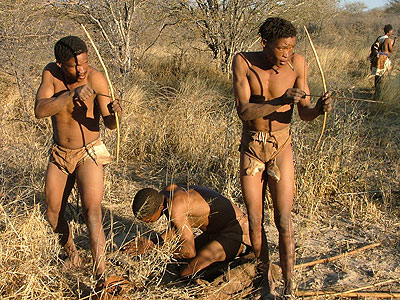
A Comparative Analysis of Hunter Gatherer Societies and Agricultural Societies


“The adoption of agriculture, supposedly our most decisive step toward a better life, was in many ways a catastrophe from which we have never recovered. With agriculture came the gross social and sexual inequality, the disease and despotism, that curse our existence…” Jared Diamond in The Worst Mistake in the History of the Human Race


It has been a few times that I have found myself arguing in defence of hunter gatherers or propagating the empirical realities of non-agricultural societies that are all too misconceived. One intensive example happened on the first day of semester holidays in 2011 whence I found myself arguing about cooperation in human nature with two others at 2AM in the cold morning in the Great Court of the University of Queensland. Thus I have been proverbially labelled at parties and such as the one who advocates the Palaeolithic lifestyle, and what a brutish, improvised and unhealthy one it is assumed. Let the record show that I do not advocate and am not advocating for a return to the hunting and gathering of our Palaeolithic ancestors. I do not advocate for such on normative and empirical grounds. Firstly, this would require an immense amount of death and suffering due to the inevitable nature of the low population density of subsistence living and the large population struggling over resources. Normatively, I believe this is morally indefensible to advocate for. Secondly, even if it were morally defensible, it is empirically physically impossible for the wholesale return of the human species to hunter gathering due to the obvious changes to the natural environment, resource depletion and changes to ecosystems and thus is moot point. 

A recent book that provides a systematic overview of hunter gatherers and agricultural societies that I also ascribe to is Pandora's Seed: The Unforeseen Cost of Civilization (2010) by Dr Spencer Wells, a geneticist, the Frank H. T. Rhodes Professor of Cornell University and the Director of the Genographic Project of the National Geographic Society. In it is asked is there some sort of fatal mismatch between western culture and our biology that is making us ill? And if there is such a mismatch, how did our present culture come to dominate? Wells argues that all of the diseases and faults of modern society, from terrorism to depression and from obesity to economic inequality, stem from the advent of agriculture. Growing grain crops ultimately made humans more sedentary and unhealthy and made the planet more crowded. The expanding population and the need to apportion limited resources such as water created hierarchies and inequalities. The desire to control and no longer cooperate with nature altered concepts of religion, making deities fewer and more influential, foreshadowing today’s fanaticisms. The proximity of humans and animals bred diseases that metastasised over time. Freedom of movement and choice were replaced by a pressure to work that is the forebear of the anxiety and depression millions feel today.

But onto those criteria that I will be using to compare hunter gather societies with agricultural societies to establish which provides the better way of life for the average person. I will be looking at two essential areas of comparison – nutrition, and socioeconomics – which I will lay out individually. This is part one and therefore the article looking at nutrition. Let us begin.

Part One: Nutrition


The area of nutrition is a very interesting one and has been subject to substantial study in debate both in the academic literature and in popular culture. With the rise of the fad of the Palaeolithic diet to counter the rising levels of chronic diseases, there has been a rekindling in the interest of the study of hunter gatherers and the disease of affluence. Through studying hunter gatherers of the past through the fields of palaeopathology and Palaeolithic archaeology and through studying the hunter gatherers of present through the fields of nutritional anthropology and ethnomedicine, it is straightforward to establish the nutrition and health of hunter gatherers in general.

The landmark study by DrClaire Cassidy, whilst a Postdoctoral Fellow at the Smithsonian Institute and the Johns Hopkins School of Medicine, of 296 skeletons of isolated American Indian agriculturalists of Hardin Village off the Ohio River in Kentucky of CE 1500 and CE 1675 and 285 skeletons of isolated Native American Indian hunter gatherers of Indian Knoll off the Green River in Kentucky of 3300 BCE to 2000 BCE, is very insightful for the comparison of nutrition. The study is fascinating due to the climatic, ecological and genetic similarity of the two cases with the only major differences being socioeconomics, chronology and diet. Through analysis of the skeletons and other archaeological evidence, the study concludes that infant mortality was higher, life expectancy was lower, and infectious diseases, tooth decay, and anaemia were more prevalent for the Hardin agriculturalists.

 “1. Life expectancies for both sexes at all ages were lower at Hardin Village than at Indian Knoll.
2. Infant mortality was higher at Hardin Village.
3. Iron-deficiency anaemia of sufficient duration to cause bone changes was absent at Indian Knoll, but present at Hardin Village, where 50 per cent of cases occurred in children under age five.
4. Growth arrest episodes at Indian Knoll were periodic and more often of short duration and were possibly due to food shortage in late winter; those at Hardin Village occurred randomly and were more often of long duration, probably indicative of disease as a causative agent.
5. More children suffered infections at Hardin Village than at Indian Knoll.
6. The syndrome of periosteal inflammation was more common at Hardin Village than at Indian Knoll.
7. Tooth decay was rampant at Hardin Village and led to early abscessing and tooth loss; decay was unusual at Indian Knoll and abscessing occurred later in life because of severe wear to the teeth.  The differences in tooth wear and caries rate are very likely attributable to dietary differences between the two groups.” (Cassidy 1980: 145)

It is pertinent to extrapolate this comparative study to analyse nutrition for many other hunter gatherers and agriculturalist. Indeed, Professor Tim Roufs of the University of Minnesota gives a systematic overview of the study and corroborating cases, as well as further analysis of the biocultural consequences of the agriculture from the Neolithic to this day.

It is also important to study the state of health and nutrition in agricultural, post-agricultural and industrial societies. A comprehensive research paper by an international group of dieticians, epidemiologists, anthropologists, biologists and medical scientists, entitled "Origins and Evolution of the Western Diet: Health Implications for the 21st Century" published in the eminent American Journal of Clinical Nutrition, posits that the diseases of civilisation, from chronic diseases to preventative illnesses, have causation with the mismatch of our Palaeolithic genome and the new foods of modernity that stem from agriculture.

“In the United States and most Western countries, diet-related chronic diseases represent the single largest cause of morbidity and mortality. These diseases are epidemic in contemporary Westernized populations and typically afflict 50–65% of the adult population, yet they are rare or non-existent in hunter-gatherers and other less Westernized people. Although both scientists and lay people alike may frequently identify a single dietary element as the cause of chronic disease (eg, saturated fat causes heart disease and salt causes high blood pressure), evidence gleaned over the past 3 decades now indicates that virtually all so-called diseases of civilization have multifactorial dietary elements that underlie their etiology, along with other environmental agents and genetic susceptibility. Coronary heart disease, for instance, does not arise simply from excessive saturated fat in the diet but rather from a complex interaction of multiple nutritional factors directly linked to the excessive consumption of novel Neolithic and Industrial era foods (dairy products, cereals, refined cereals, refined sugars, refined vegetable oils, fatty meats, salt, and combinations of these foods). These foods, in turn, adversely influence proximate nutritional factors, which universally underlie or exacerbate virtually all chronic diseases of civilization: 1) glycemic load, 2) fatty acid composition, 3) macronutrient composition, 4) micronutrient density, 5) acid-base balance, 6) sodium-potassium ratio, and 7) fiber content. However, the ultimate factor underlying diseases of civilization is the collision of our ancient genome with the new conditions of life in affluent nations, including the nutritional qualities of recently introduced foods.”

Thus it is clear that in terms of nutrition, hunter gatherers had a far healthy diet than agriculturalist and that many of the chronic diseases of the contemporary stem from the mismatch of agricultural based foods and our Palaeolithic genome. Although, it is obvious that the Western diet is poor through the mere observation of the high chronic levels of obesity, cardiovascular diseases and diabetes that plaque our society. It should be known that I am not advocating the Palaeolithic diet as the cure to all this. The consumption of the agricultural based foods and other products is only a danger to health when it is combined with the sedentary lifestyle we have and when preventative health measure (such as health education, dental care, exercise) are ignored. In summation, it is clear that the nutrition of hunter gatherers led to healthy lives for the average person than in agricultural societies. Although through modern medicine and preventative health, all the general nutrition and therefore health of the average modern person is improved in theory if not in practice.
--
Tasman Bain is a second year Bachelor of Arts (Anthropology) and Bachelor of Social Science (International Development) Student at the University of Queensland. He debated at the 2012 World Universities Debating Championship in Manila, was a Member of the 2011 Queensland Youth Parliament and was an Australian Representative at the 2010 Asia Pacific Young Leaders Summit in Singapore.

Sunday, 15 April 2012

The "Fairness Instinct" and the Biosocial Contract by Peter Corning

It seems that fairness is an idea whose time has come.

True, some cynics view fairness as nothing more than a mask for self-interest.  As the playwright George Bernard Shaw put it, “The golden rule is that there is no golden rule.”  But the cynics are wrong.  One of the important findings of the emerging, multi-disciplinary science of human nature is that humans do, indeed, have an innate sense of fairness.  We regularly display a concern for others’ interests as well as our own, and we even show a willingness to punish perceived acts of unfairness.

The accumulating scientific evidence for this distinctive human trait, which is reviewed in my new book The Fair Society: The Science of Human Nature and the Pursuit of Social Justice, suggests that it has played an important role in our evolution as a species.  It has served to facilitate and lubricate the close-knit social organization that has been a key to our success as a species.

Among other things, the evidence for this trait includes anthropologist Donald Brown’s finding, reported in his landmark study, Human Universals, that altruism, reciprocity, and a concern for fairness are cultural universals.  Likewise, in the field of behavior genetics, many studies have documented that there is a genetic basis for traits that are strongly associated with fairness, including altruism, empathy and “nurturance.”

In the brain sciences, the experiments of Joshua Greene and his colleagues have identified specific brain areas associated with making moral choices.  Another team, headed by Alan Sanfey, pinpointed a brain area specifically associated with feelings of fairness and unfairness when subjects were participating in the so-called “ultimatum game” in his laboratory. 

There is also the extensive research by evolutionary psychologists Leda Cosmedes and John Tooby and a number of their colleagues on what they term “social exchange” (or reciprocity) – which they point out exists in every culture.  Cosmedes and Tooby have concluded that humans possess a discreet “mental module” -- a dedicated neurocognitive system – for reciprocity behaviors.

In a similar vein, the work on “strong reciprocity theory” in experimental and behavioral economics has repeatedly demonstrated that even altruistic behaviors can be elicited in cooperative situations if there is a combination of strict reciprocity and punishment for defectors.

Finally, it has been shown that even some nonhuman primates display in a rudimentary form some of the traits associated with fairness behaviors in humans.  For instance, primatologist Frans de Waal, in a classic laboratory experiment, clearly demonstrated the existence of reciprocity behaviors in capuchin monkeys.

It seems evident that a sense of fairness is an inborn human trait.  It means, quite simply, that we are inclined to take into account and accommodate to the needs and interests of others.  However, it is equally clear that our sense of fairness is labile.  It can be subverted by various cultural, economic and political influences, not to mention the lure of our self-interests.  And, of course, there are always the “outliers” – the Bernie Madoffs.

In fact, our predisposition toward fairness, like every other biological trait, is subject to significant individual variation.  Numerous studies have indicated that some 25-30 percent of us are more or less “fairness challenged.” Some of us are so self-absorbed and egocentric that we are totally insensitive and even hostile to the needs of others.  Ebenezer Scrooge in Charles Dickens’s “A Christmas Carol,” and the banker Henry F. Potter in Frank Capra’s timeless Christmas movie “It’s a Wonderful Life” were caricatures, of course, but many of us have seen likenesses in real life.

Thus fairness is not a given.  It’s an end that can only be approximated with consistent effort and often in the face of strong opposition.  And in the many cases where there are conflicting fairness claims, compromise is the indispensable solvent for achieving a voluntary, consensual outcome.

At the individual level, fairness is an issue in all of our personal relationships -- in our families, with our loved ones, with friends, and in the workplace. We are confronted almost every day with concerns about providing, or doing, a “fair share,” reciprocating for some kindness, recognizing the rights of other persons, being fairly acknowledged and rewarded for our efforts, and much more.

However, fairness is also an important, “macro-level” issue in our society, and the debate about what is often referred to as “social justice” can be traced back at least to Plato’s great dialogue, The Republic.  For Plato, social justice consists of “giving every man his due” (and every woman, of course).  His great student, Aristotle, characterized it as “proportionate equality.”  Plato also advanced the idea that every society entails a social “compact” – a tacit understanding about the rights and duties, and benefits and costs, of citizenship – and he viewed social justice as the key to achieving a stable and harmonious society.    

The idea that there is a more or less explicit “social contract” in every society is more commonly associated with the so-called social contract theorists of the seventeenth and eighteenth centuries – such as Rousseau, Hobbes, and Locke – and more recently, John Rawls.  Rousseau fantasized about free individuals voluntarily forming communities in which everyone was equal and all were subject to the “general will.”  Thomas Hobbes, in contrast, envisioned a natural state of anarchic violence and proposed, for the sake of mutual self-preservation, that everyone should be subject to the absolute “sovereign” authority of the state.  John Locke, on the other hand, rejected this dark Hobbesian vision.  He conjured instead a benign state of nature in which free individuals voluntarily formed a limited contract for their mutual advantage but retained various residual rights.

The philosopher David Hume, and many others since, have made a hash of this line of reasoning.  In a devastating critique, A Treatise of Human Nature (published in 1739-40), Hume rejected the claim that some deep property of the natural world (natural laws), or some aspect of our past history, could be used to justify moral precepts.  Among other things, Hume pointed out that even if the origins of human societies actually conformed to such hypothetical motivations and scenarios (which we now know they did not), we have no logical obligation to accept an outdated social contract that was entered into by some remote ancestor.

With the demise of the natural law argument, social contract theory has generally fallen into disfavor among philosophers, with the important exception of the work of John Rawls.  In his 1971 book, A Theory of Justice, Rawls’ formulation provoked a widespread reconsideration of what constitutes fairness and social justice and, equally important, what precepts would produce a just society.  Rawls proposed two complementary principles: (1) equality in the enjoyment of freedom (a concept fraught with complications), and (2) affirmative action, in effect, for “the least advantaged” among us.  This would be achieved by ensuring that the poor have equal opportunities and that they would receive a relatively larger share of any new wealth whenever the economic pie grows larger.  Although Rawls’ work has been exhaustively debated by philosophers and others over the years, it seems to have had no discernable effect outside of academia.

However, there is one other major exception to the general decline of social contract theory that is perhaps more significant.  Over the past two decades, a number of behavioral economists, game theorists, evolutionary psychologists and others have breathed new life into this venerable idea with a combination of rigorous, mathematically-based game theory models and empirical research.  Especially important is the work of the mathematician-turned-economist Ken Binmore, who has sought to use game theory as a tool for resuscitating social contract theory on a new footing.  In his 2005 book, Natural Justice, Binmore describes his approach as a “scientific theory of justice,” because it is based on an evolutionary/adaptive perspective, as well as the growing body of research in behavioral and experimental economics regarding our evolved sense of fairness plus some powerful insights from game theory.

Briefly, Binmore defines a social contract in very broad terms as any stable “coordination” of social behavior – like our conventions about which side of the road we should drive on or pedestrian traffic patterns on sidewalks.  Any sustained social interaction in what Binmore refers to as “the game of life” – say a marriage, a car pool, or a bowling league -- represents a tacit social contract if it is (1) stable, (2) efficient, and (3) fair.  To achieve a stable social contract, Binmore argues, a social relationship should strive for an equilibrium condition – an approximation of a Nash equilibrium in game theory.  The rewards or “payoffs” for each of the players should be optimized so that no one can improve on his or her own situation without exacting a destabilizing cost from the other cooperators.  Ideally, then, a social contract is self-enforcing.  As Binmore explains, it needs no social “glue” to hold it together because everyone is a willing participant and nobody has a better alternative.  It is like a masonry arch that requires no mortar (a simile first used by Hume).

The problem with this formulation – as Binmore recognizes -- is that it omits the radioactive core of the problem – how do you define fairness in substantive terms?  As Binmore concedes, game theory “has no substantive content…It isn’t our business to say what people ought to like.” Binmore rejects the very notion that there can be any universals where fairness is concerned.  “The idea of a need is particularly fuzzy,” he tells us.  In other words, Binmore’s version of a social contract involves an idealization, much like Plato’s republic, or free market (utopian) capitalism, or Karl Marx’s utopian socialism.  Fairness is whatever people say it is.

I have taken a different approach. What I call a “biosocial contract” is distinctive in that it is grounded in our growing understanding of human nature and the basic purpose of a human society.  It is focused on the content of fairness, and it encompasses a set of specific normative precepts.  In the game theory paradigm, the social contract is all about harmonizing our personal interactions.  Well and good.  But in a biosocial contract, the players include all of the stakeholders in the political community and substantive fairness is the focus. 

A biosocial contract is about the rights and duties of all of the stakeholders in society, both among themselves and in relation to the “state”.  It is about defining what constitutes a “fair society.”  It is a normative theory, but it is built on an empirical foundation.  I believe it is legitimate to do so in this case, because life itself has a built-in normative bias – a normative preference, so to speak.  We share with all other living things the biological imperatives associated with survival and reproduction.  If we do, after all, want to survive and reproduce – if this is our shared biological objective -- then certain principles of social intercourse follow as essential means to this end.

First and foremost, a biosocial contract requires a major shift in our social values.  The deep purpose of a human society is not, after all, about achieving growth, or wealth, or material affluence, or power, or social equality, or even about the pursuit of happiness.  An organized society is quintessentially a “collective survival enterprise.”  Whatever may be our perceptions, aspirations, or illusions (or for that matter, whatever our station in life), the basic problem for any society is to provide for the survival and reproductive needs of its members.  However, it is also important to recognize differences in merit and to reward them accordingly.  Finally, there must also be reciprocity -- an unequivocal commitment on the part of all of the participants to help support the survival enterprise, for no society can long exist on a diet of altruism.  Altruism is a means to a larger end, not an end in itself.  It is the emotional and normative basis of our safety-net.

As discussed at length in my book, a biosocial contract encompasses three distinct normative (and policy) precepts that must be bundled together and balanced in order to approximate the Platonic ideal of social justice.  These precepts are as follows:

(1)    Goods and services must be distributed to each according to his or her basic needs (in this, there must be equality);

(2)    Surpluses beyond the provisioning of our basic needs must be distributed  according to “merit” (there must also be equity);

(3)    In return, each of us is obligated to contribute to the collective survival enterprise proportionately in accordance with our ability (there must be reciprocity).

The first of these precepts involves a collective obligation to provide for the common needs of all of our people.  To borrow a term from the TV series Star Trek, this is our “prime directive.”  Although this precept may sound socialistic -- an echo of Karl Marx’s famous dictum -- it is at once far more specific and more limited.  It refers to the fourteen basic biological needs domains that are detailed in my book.  Our basic needs are not a vague, open-ended abstraction, nor a matter of personal preference.  They constitute a concrete but ultimately limited agenda, with measurable indicators for assessing outcomes.

These fourteen basic needs domains include a number of obvious items, like adequate nutrition, fresh water, physical safety, physical and mental health, and waste elimination, as well as some items that we may take for granted like thermoregulation (which may entail many different technologies, from clothing to heating oil and air conditioning), adequate sleep (about one-third of our lives), mobility, and even healthy respiration, which can’t always be assured.  Perhaps least obvious but most important are the requisites for reproduction and the nurturance of the next generation.  From this perspective, our basic needs cut a very broad swath through our economy and our society.

The idea that there is a “social right” to the necessities of life is not as radical as it may sound.  It is implicit in the Golden Rule, the great moral precept that is recognized by every major religion and culture.  Furthermore, numerous public opinion surveys over the years have consistently shown that people are far more willing to provide support for the genuinely needy than the Scrooges among us would lead one to believe.  (Some of these surveys are cited in my book.) 

Even more compelling, I believe, are the results of an extensive series of social experiments regarding distributive justice by political scientists Norman Frohlich and Joe Oppenheimer and their colleagues, as detailed in their 1992 book Choosing Justice.  What Frohlich and Oppenheimer set out to test was whether or not ad hoc groups of “impartial” decision-makers behind a Rawlsian “veil of ignorance” about their own personal stakes would be able to reach a consensus on how to distribute the income of a hypothetical society. Frohlich and Oppenheimer found that the experimental groups consistently opted for striking a balance between maximizing income (providing incentives and rewards for “the fruits of one’s labors,” in the authors’ words) and ensuring that there is an economic minimum for everyone (what they called a “floor constraint”). The overall results were stunning: 77.8 percent of the groups chose to assure a minimum income for basic needs. 

The results of these important experiments also lend strong support to the second of the three fairness precepts listed above concerning equity (or merit).  How can we also be fair-minded about rewarding our many individual differences in talents, performance, and achievement.  Merit, like the term fairness itself, has an elusive quality; it does not denote some absolute standard.  It is relational, and context-specific, and subject to all manner of cultural norms and practices.  But, in general, it implies that the rewards a person receives should be proportionate to his or her effort, or investment, or contribution. 

A crucial corollary of our first two precepts is that the collective survival enterprise has always been based on mutualism and reciprocity, with altruism being limited (typically) to special circumstances under a distinct moral claim -- what could be referred to as “no-fault needs.”  So, to close the loop, a third principle must be added to the biosocial contract, one that puts it squarely at odds with the utopian socialists, and perhaps even with some modern social democrats as well.   In any voluntary contractual arrangement, there is always reciprocity -- obligations or costs as well as benefits.  As I noted earlier, reciprocity is a deeply rooted part of our social psychology and an indispensable mechanism for balancing our relationships with one another.  Without reciprocity, the first two fairness precepts might look like nothing more than a one-way scheme for redistributing wealth.

As detailed in the book, a greater emphasis on reciprocity in our society would include such things as a more equitable tax code, higher taxes as necessary to support the basic needs of the 30 million (plus) Americans who suffer from extreme poverty, and a lifelong public service obligation beginning with a year of national service for everyone who is able to do so, or two years for those who receive special benefits like educational assistance.  

Some critics might object to such incursions on their freedom, but John Rawls’s definition of fairness under a social contract provides a definitive rebuttal, in my view:  “The main idea is that when a number of persons engage in a mutually advantageous cooperative venture according to rules, and thus restrict their liberty in ways necessary to yield advantages for all, those who have submitted to these restrictions have a right to a similar acquiescence on the part of those who have benefited from their submission.”   

To conclude then, what the biosocial contract adds to Plato’s great vision is the recognition that there are in fact three distinct categories, or types of substantive fairness and that these must be combined and balanced in appropriate ways.  The substantive content of social justice consists of providing for the basic needs of the population, along with equitably rewarding merit and insisting on reciprocity. The biosocial contract paradigm also enlists the growing power of modern evolutionary biology and the human sciences to shed light on the matter, and it identifies an explicit set of criteria for reconciling (if not harmonizing) the competing claims that have been promoted by political ideologues of the Left and the Right.

I believe that this framework offers our best hope for achieving and maintaining that elusive state of voluntary consent that is the key to a harmonious society – a Nash equilibrium writ large.  This is an ideal worth striving for, because our own survival, and more certainly that of our descendants, may well depend upon it.  As the great American public park designer Frederick Law Olmstead put it, “The rights of posterity take precedence over the desires of the present.”  Nothing less than our evolutionary future is at stake.


--
Dr. Peter Corning is the Founding Director of the Institute for the Study of Complex Systems. He was Professor in the Interdisciplinary Human Biology Program at Stanford University and is the author of over 150 scientific articles and books, most recently “The Fair Society: The Science of Human Nature and the Pursuit of Social Justice” (University of Chicago Press 2011).