Showing posts with label Social Science. Show all posts

Friday, 24 August 2012

The Contentious History of Evolutionary Theory in the Anthropological Academy: From Boasian Historical Particularism to Wilson's Sociobiology


With the publication of On the Origins of Species, Darwin’s theory of evolution by natural selection has been one of the most profound theories in the biological sciences in expounding and analysing the physical, genetic and behavioural diversity of animals. Indeed Darwinian evolution has been a profound theory outside of the biological sciences – namely it has had remarkable impact in the social sciences throughout its history. During the nineteenth century, “versions of Darwinian evolution took centre stage in political and social philosophy and in the human sciences.” A number of anthropologists came to understand cultural variation in terms of a linear progression to a cultural apex, then considered Western civilisation. This interpretation was rebuked by the anthropological school of cultural relativism and it became essentially taboo by the academy to utilise evolutionary theory in the social sciences. That said, during the early to mid-twentieth century a number of sociopolitical movements, such as the Nazi party and the eugenics movement, appropriated Darwinism to justify the genocide of certain deemed “unfavourable” and “subhuman” demographics. Such justifications were strongly condemned by evolutionary scientists as pseudoscientific and immoral but such utilisation of evolutionary theory in the social sciences still remained seriously contentious. Then in 1975 the American entomologist Wilson developed the field of sociobiology as the “systematic study of the biological basis of all social behaviour in the context of evolution” and in 1976 the British zoologist Dawkins developed the gene-centred view of evolution based on “selfish genes” determining natural selection and consequent behaviour of an organism. Whilst both Wilson and Dawkins primary aims were with the study of non-human animals, their theories flowed over into the realms of the social sciences. Indeed there was a profound backlash in the social sciences academy claiming that sociobiology and the gene-centred view were ethnocentric, reductionist, determinist and flawed in explaining human nature. By the 1990s, the debate over human sociobiology culminated in the development of evolutionary psychology as attempting to respond to the criticisms against evolutionary theory in the social sciences. Led by Barkow, Cosmides, and Tooby, evolutionary psychology aimed to understand the “neurobiology of the human brain as a series of evolutionary adaptations and that human behaviour and culture thus stem from the genetics and evolution of the brain.” Yet there still exists and persists contentions from the social sciences, particularly cultural anthropology, against sociobiology and evolutionary psychology. This essay will examine the history of the contributions and criticisms of evolutionary theory in the social sciences, from its racist and pseudoscientific past to its current contributions. Then it will examine the contributions and theory of sociobiology and evolutionary psychology as applied to anthropology in explaining human nature and also examine the contentions and controversy in the anthropological academy in response to such. Overall this essay will not delve into the technical details and scientific theory of evolutionary theory, but rather examine its claims and responses to and from in the anthropological academy.

Darwin’s theory of evolution by natural selection has presented an interpretation of human nature that has been at odds with prevailing theoretical paradigms throughout its history. The theorisation of human nature through conceptions of evolution and instinct has been undertaken by such figures as Darwin himself, Hume, Smith and Huxley who have proposed that the mosaic of human nature stems from innate human instincts. Whilst this paradigm of evolutionary social science culminated as essentially “passive and benign contemplations”, the theory of evolution of natural selection also manifested as bigotry, racism and the apparent justification of white Anglo male supremacy based on a linear interpretation of history. The school of social evolutionism in the anthropological academy led by Tylor, Morgan and Spencer became the dominant paradigm in the late ninetieth century and became appropriated as Social Darwinism in popular discourses. This paradigm utilised the framework of evolution to describe the differences between developed Western civilisations and non-developed “savage” cultures as stemming from the biological inferiority of the “savages” who were considered more related to chimpanzees than the superior Anglo-Saxons. Social movements also took up this school of thought and supported social policies of eugenics and forced sterilisation of certain demographics such as those in low socioeconomic statuses, those with disabilities or mental illness, or those from non-white ethnicities. Key responses to this school came from Boas and Kroeber in the anthropological schools of historical particularism and cultural relativism. These schools posited that the history of humanity is not a linear progression to the technological civilisation of the West but rather that each culture must be understood by “its own conditions and own particular cultural history.” Yet, there have still been individuals and groups that support Social Darwinism, culminating in cases such as the forced assimilation of Australian Aboriginals in the early twentieth century and the genocide committed by the Nazi regime during 1933 to 1945. After the Second World War, as Degler posits “the utilisation of the theory of the biological sciences in the social sciences and the ‘biologicisation’ of human nature became a taboo” due to the profound consequences of its appropriations.

During the 1970s there was a revival in the theory of evolutionary theory with advances in molecular biology, genetics, computer science and mathematical game theory. This revival was primarily aimed at explaining non-human animal behaviour and was largely led by Wilson and Dawkins along with other evolutionary theorists. Although this was the primary aim of the science, both Wilson and Dawkins still theorised on the evolution of human behaviour using the same paradigm of evolutionary theory of the study non-human behaviour. There was profound backlash in the social sciences, primarily by Lewontin, Rose, and Kamin and Sahlins with the scientific reductionism and biological determinism of sociobiology in explaining culture, but also controversy surrounding the ideological and ethical implications of such. Thus the theorists of sociobiology then responded to such criticism and controversy with the development of the field of evolutionary psychology. Led by Barkow, Cosmides and Tooby, evolutionary psychology attempted to redress the claims of reductionism and determinism by focusing on the dichotomy of nature and nurture through holistically studying the neurobiological, cognitive and psychological factors of human nature. Yet, the paradigm of evolutionary psychology has also too been met with profound criticism from the anthropological academy. Despite such criticism over legitimacy and usefulness, the fields of sociobiology, evolutionary psychology and the general application of evolutionary theory in the social sciences, have been increasingly taken up in the biological and social sciences academies.


The majority of ethical, practical and theoretical contentions in the anthropological academy surrounding the application of evolutionary theory to explain human nature stem from the reductionism and genetic determinism of evolutionary theory. Indeed the question of how in the confines of the so perceived savage, impersonal and selfish world of Darwinian natural section can complex social structures and cultural norms come about is indeed important. Sociobiology and evolutionary psychology as they manifest in the academic and popular literature have been rebuked by anthropologists and other cultural theorists as being “ethnocentric, reductionist, determinist, and philosophically reprehensible.” Critics level evolutionary theory “is merely academic fancy foot work away from the archaic and pseudoscientific” school of social evolutionism of the nineteenth century, that it explicitly and implicitly makes “false, flawed and unsubstantiated assumptions about social, political, economic, and cultural processes”, and that even the presumption of a “human nature itself is flawed.” Indeed as Sahlins has stated, evolutionary theory in the social sciences is “at its worst pseudoscientific and racist and at its best it is quasi-scientific based on flawed principles and methodology with a profound misunderstanding of the dynamics of culture.” The responses to these claims by evolutionary theorists have centred on pointing out the “fundamental biological basis of humans, being an animal species just like any other” but also pointing out the “naturalistic fallacy between making descriptive and normative judgements."

The theory of sociobiology and evolutionary psychology is predicated, by definition, on reducing human behaviour to an evolutionary and biological basis. According to Lewontin and Sahlins this does away with the cultural forces of acculturation and diffusion and other social, economic and political dynamics. Indeed explaining human behaviour by “reducing it down to the genes of the body and modules in the brain” fundamentally “neglects to recognise the power of culture in shaping and reshaping the human mind.” Thus the theorisation of the gene and or the brain being the paramount determiner in human behaviour is flawed as it “restricts the interpretation of behaviour and its cultural context.” Rather, Lewontin propounds a dialectical and interactionist interpretation of human behaviour in response to the reductionism as “it is not just that wholes are more than the sum of their parts, it is that parts become qualitatively new by being parts of the whole.” Lewontin propose that dialectical explanations are more effective and holistic in explaining human behaviour in contrast to the “reductionist calculus of the evolutionary neurobiological and gene-centred view of culture.” In response, evolutionary theorists propose that reductionism is an “important scientific principle.” Moreover such theorists as Barkow and Wilson propose that the theory of evolutionary psychology also seeks a holistic interpretation of human nature via genetic, cognitive, neurobiological and psychological processes “based on the fact that humans have evolved to environments with culture – that culture is not independent of evolution, but rather biology is the precursor.” Indeed “culture is sometimes advanced as competing with explanations that invoke evolutionary psychology, most frequently when cross-cultural variability is observed” and these “cultural explanations invoke the notion that differences between groups are prima facie evidence that culture is an autonomous causal agent.” Evolutionary theorists respond to these criticisms by stating that “cultural explanations are more or less cultural reductionism” and “ignorant of the role of biology and innate characteristics” that have evolved in the human species.

Along with the claims and criticisms of reductionism against sociobiology and evolutionary psychology is biological determinism. The critics label sociobiology and evolutionary psychology as biological determinist and that evolutionary theory is ignorant of the forces of nurture and the capacity of culture and social environments to shape and reshape human nature, but also that evolutionary theory facilitates and entrenches racism, sexism and prejudice. Indeed major criticism against sociobiology and evolutionary psychology that stems from the ethical, political and social implications of their theoretical underpinnings and findings. The critics of evolutionary psychology propose that evolutionary theory promotes or at least enables racism and sexism and does to re-entrench out-dated perceptions of sex and race. This criticism came from key findings in evolutionary psychology that the male and female brains evolved differently and thus possess different cognitive and behavioural hardwiring and that certain ethnicities are more likely to behave in certain ways or are more susceptible to certain diseases. Indeed, some evolutionary theorists, such as Jensen have even claimed that that intelligence is inheritable, that certain races are more intelligent than others, and that racial economic equality is unattainable. Thus it is proposed that just as the historically dominant class ideologies that supported the oppression of women and ethnic minorities had strong pseudoscientific justifications, in the form of assertions that women and ethnic minorities were genetically inferior, sociobiology and evolutionary psychology makes it possible again to hold such beliefs.

All this criticism has been strongly responded to by evolutionary theorists primarily based on pointing forth the naturalistic fallacy and that “sociobiology and evolutionary psychology are scientific disciplines with no social agenda.” It is also put forward that the frameworks of sociobiology and evolutionary psychology dissolve dichotomies of nature versus nurture, innate versus learned, and biological versus culture. It is not biological determinism but rather an understanding that genes and other biological factors predispose certain behavioural traits and therefore culture. Moreover, it is proposed that the biological determinism perceived of evolutionary theory in the social sciences “as being seen to be antithetical to social or political change is evidently historically falsified.” Evolutionary theorists respond with that evolutionary psychology does not privilege or prejudice individuals or groups but rather just seeks to describe and that the claims on racial inequality being inevitable by Jensen and Herrnstein have been discredited in the evolutionary theory by fellow theorists such as De Waal and Pinker. Indeed, it has been asserted that critics have been putting forth critiques based on personal political and ethical values rather than any empirical or explanatory factors and thus the attacks against evolutionary theory have been made on “non-scientific grounds”. Sociobiologists and evolutionary psychologists “should and do acknowledge the role of ideology and politics in the formation and support of scientific paradigms” but do not let it influence their own paradigm. Moreover it is noted that “genetically determined mechanisms do not imply genetically determined behaviour” and thus the theory of sociobiology and evolutionary psychology is not predicated on genetic determinism. Fundamentally critics do not recognise the naturalistic fallacy in their critiques of the ethical implications of evolutionary theory. Indeed “an explanation is not a justification” and neither sociobiology nor evolutionary psychology attempt to justify the existence of social hierarchies, racism or sexism – “when they are and have been used to justify such than evidently that is not scientific.” It is posited that any “politically incorrect assertions of evolutionary psychology are based on considerable empirical evidence” and indeed critics are welcome to challenge the evidence or provide testable alternative explanations. Overall it is a profound misunderstanding of sociobiology and evolutionary psychology to claim it is biological determinist when it takes in genetic, neurobiological, and cultural evolution of human behaviour. Thus when the theoretical paradigm fails to achieve such a spread of looking at genetic, neurobiological and cultural factors, theorists agree with critics that such a paradigm is indeed flawed.
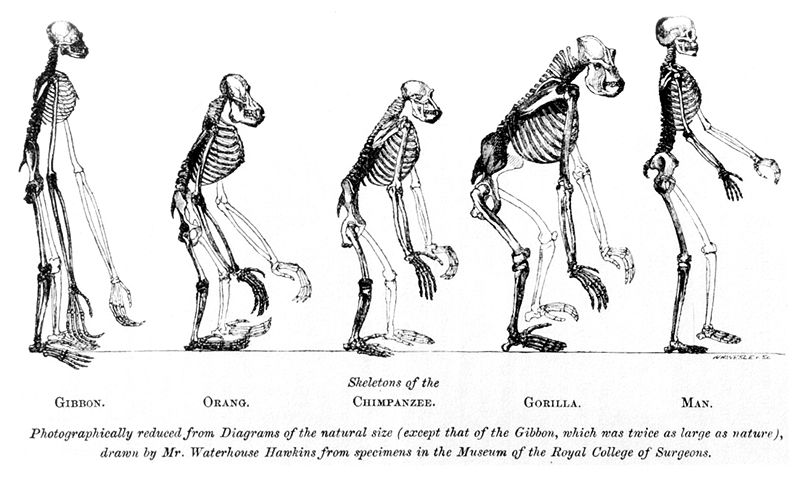

The resurgence of evolutionary theory in the social sciences has indeed been a contentious and controversial one with much criticism being levelled against it but it also has managed to make constructive contributions to the anthropological academy. With its archaic and pseudoscientific beginnings in the schools of social evolutionism and Social Darwinism of Tylor, Morgan and Spencer arguably behind it, Wilson and Dawkins and then Barkow, Cosmides and Tooby and others transformed the application of evolutionary theory in the social sciences. Yet indeed the theory of sociobiology and evolutionary theory was met with critical claims of ethnocentrism, determinism and reductionism by Sahlins, and Lewontin, Rose, and Kamin and others, it responded with arguments stemming from the naturalistic fallacy and that it is a misunderstanding of the theory to label it determinist. Indeed the majority of theorists, both evolutionary and non-evolutionary, acknowledge that it is flawed and invalid to make purely reductionistic and biologically determinist explanations for human nature, specifically culture. Thus evolutionary theory attempts to employ a holistic interpretation based on neurobiological, genetic and cultural factors whilst firmly grounded in the understanding that humans have evolved with culture. Overall, whilst evolutionary theory in the social sciences, particularly cultural anthropology, has been and still largely is contentious, it is becoming the popular and prevailing paradigm once again. Thus sociobiology and evolutionary psychology must not revert to their natal beginnings in the application of the human sciences through justifying racism and sexism and other forms of violence and prejudice of the times of Social Darwinism. Fundamentally evolutionary theory must progress cautiously in explaining the politically, socially and morally sensitive issues that exist. Indeed making politically incorrect findings through evolutionary theory is essentially inevitable and should not be refrained from, but its theorist must recognise the consequences as they manifest in the social environment that it exists in. 

--
Tasman Bain is a second year Bachelor of Arts (Anthropology) and Bachelor of Social Science (International Development) Student at the University of Queensland. He is interested evolutionary anthropology, social epidemiology and philosophy of science and enjoys endurance running, reading Douglas Adams, and playing the glockenspiel.

Saturday, 4 August 2012

Communist Countries: Crisis, Contradiction and Collapse

Introduction: A Beautiful Idea, Really?
I've often had people claim to me that communism would be a great idea, if only human nature let it work. But I don't think that Marxist communism in particular would work on even a theoretical level- the idea of a 'dictatorship of the proletariat' ever seeding power is beyond comprehension. Were then communist systems always doomed to fail, or might they have survived if not for a few historical quirks?

Marx claimed in Das Kapital that “capitalist production begets, with the inexorability of a law of Nature, its own negation”. His argument was that because capitalist societies relied on social production to create wealth but private appropriation to obtain wealth, they were fated to collapse. However, communist systems also suffered systemic crises, from the failure of the New Economic Policy to the USSR’s fall. Indeed, communist systems suffered from the same internal contradiction as capitalist systems, notably an exclusive extractive class which took profits away from socially productive workers. Communist systems in fact fared worse than capitalist economies from this because they entrenched party apparatchiks at the head of their economies and lacked the 'creative destruction' of capitalism. As a consequence,   they suffered systemic crises, to which unlike capitalist democracies, they could not adapt. I want to make two points in this post: first, that the autocratic nature of communist parties lead to the creation of a new extractive class, that of autocratic party bureaucrats and second, that this internal contradiction lead to crises in communist nations, leading to their eventual collapse. Thus, it will be proven that not only did communist systems contain internal contradictions; they suffered worse from them than capitalist systems.

Party Bureaucrats: The World's Best Rent-Seekers
Communist systems lead to the substitution of Marx and Engel’s bourgeois class who aimed for the “accumulation of wealth in private hands” for a group of party bureaucrats who were equally extractive, thus leading to an inherent contradiction. Official Soviet propaganda espoused that the regime was leading the USSR to a “brilliant future… one of liberty, equality, fraternity, guaranteed employment”. However, because of the inherent vagueness in Marx’s idea of the “dictatorship of the proletariat” which he claimed would lead to the “abolition of all classes” after a transition phase of socialist rule, all communist systems in reality did not transition out of bureaucratic socialism. As Olson notes, under Stalin this meant that the party expropriated all natural resources and capital to add to its yield to its tax collections and also directly controlled consumption and investment for its own benefit. 

Party members were rewarded from this expropriation with special stores, health care facilities and vacation spas in return for loyalty to the party. CPSU members were paid 127 per cent of the average wage of a government worker and their pay was one third of the government administration budget. Further, there was systemic soliciting of in-kind payments and direct stealing. They also engaged in what Verdery terms “political capitalism”, that is bureaucrats used the shortages inherent to the system to make a profit from selling scarce goods. Party “apparatchiks” thus became the class of rent-seekers that Marx railed against because the command economy allowed them to do so. They constituted a class both in terms of political power, economic capital and the ability to consume both more goods and those of a higher quality. Communist systems became a form of what Clark and Wildavsky call “vulgar capitalism” or “profit-making without competition… based on corrupt personal relations”. Simultaneously, bureaucrats were rhetorically devoted to “large-scale heroic means of production”, production based around work done cooperatively. Therefore, so-called communist systems suffered from the same internal contradiction as capitalist systems: while production was (at least initially- black markets eventually flourished) social and cooperative, the accumulation of wealth was private and worked by class expropriation.

Tear Down That Wall!
Further, this inherent contradiction led to inevitable crises in communist systems, to which they could not adjust unlike capitalist systems, which led to their collapse.  Marx believed that the inherent contradiction in the expropriation of workers by the bourgeoisie would eventually lead to a decline in the “rate of exploitation” because “vampire-like, the capitalist only lives by sucking labor”. His argument was that eventually this would lead to recessions and the awakening of class-consciousness. This problem was also present in the Soviet Union, where the extraction of wealth by members of the CPSU helped to slow economic growth to the point where in 1967 the GNP of West Germany was larger than the entire Soviet Bloc. In particular as Maier outlines the extractive process of the communist system hampered the social production of the workers on which it depended. 

Somewhat fittingly, this led to the class conflict that Marx had predicted capitalism falling prey to, especially the rise of the Polish trade union Solidarity that was integral in the USSR’s collapse. This was worsened by the chronic shortages of basic goods which led to worse recessions than those experienced in capitalist systems. Capitalist systems did not suffer as badly because, as Marx was unable to foresee, the welfare state was developed, which redistributed profits to the working class because it was in the bourgeois political class’ interest to avoid class conflict. In contrast, the extractive behaviours of communist party members were only possible through continued coercion of those they were apparently serving. As soon as communist regimes faced crises they could not adapt except by further coercion and entrenchment of expropriation behaviours. Thus, as soon as communist regimes were opened to partial openness such as under Gorbachev’s glasnost in order to create more profits to expropriate, they began to collapse under the weight of their own internal contradictions. This has occurred not just in the Soviet Union, but also in the fall of Yugoslavia, the transformation of the People’s Republic of China and recent partial reforms in the collapsing Cuban economy. Thus, the inherent contradiction in communist systems and their inability to adapt to the crises resulting from it led to their eventual total collapse. 

Conclusion and Consequences
In conclusion, contrary to Marx’s predictions, this essay has shown that the autocratic nature of communist “dictatorships of the proletariat” created the same inherent contradiction between the social production and private extraction and accumulation of wealth inherent in capitalism. Further, it has shown that this led to crisis and eventual collapse of communist systems because the extractive class in the communist system could not allow for it to be adapted unlike the capitalist bourgeois class. Thus, Marx’s proposed solution to capitalism became self-defeating in practice for precisely the reasons Marx felt that capitalism would fail.

--
Dan Gibbons is a third year Bachelor of Commerce (Economics) student at the University of Melbourne. He has a forthcoming publication in Intergraph: A Journal of Dialogic Anthropology (about memory and nationalism) and is currently submitting papers on the rise of modern consumerism, the role of criminology theory in literary criticism and the institutional theory of nationalism. Dan is a keen debater and public speaker.

Friday, 20 July 2012

Almost Human: On Great Apes, Selfhood and Rights


The Great Apes are always seen as humanlike- probably why films like The Planet of the Apes resonate so much- after all could we really relate to a 'Planet of the Elephants' even if we know elephants are intelligent? And when we see apes in pain or being mistreated this tends to again tear at our heart strings more than most animals, save in Western cultures perhaps dogs or cats. While we aren't directly descended from chimpanzees (contra Darwin's initial musings on human evolution), we are very closely related- so this does indeed make sense. But is there a scientific basis to this feeling that we aren't too different from apes?

In particular, after a recent Australs debate (to the effect of that this house would grant the great apes more rights than other animals), I was prompted to think about some of the scientific underpinnings of that debate- do apes have selfhood? Should we grant rights on this basis? Do apes have unique cognitive capabilities? This very complex series of questions is far too much for a blog post of this length to entirely deal with- so for those particularly interested I recommend The Age of Empathy by Frans de Waal, or indeed any of de Waal's masterful works. I will briefly outline two claims: apes have many humanlike capacities and do have selfhood (or something very closely equivalent) and that attendant to this we should grant animal rights on a spectrum (because they should exist for purposes that aren't just for human benefit).


"Beware the beast Man, for he is the Devil's pawn": What separates apes from man?
A good summary answer would be: effectively, a lot of apes' capacities are simply gradations of fully mentally able human capacities. 

Let's start with recognising others: that capability is a lot more basic- it exists in a lot more species than can recognise themselves- for instance social insects are aware of what the other members of the colony are feeling but hardly care much for their own being. The most basic capacity of any social creature is emotional contagion- that is, the ability to perceive others' emotions and feel them yourself. This is what newborn babies in hospitals can do- cry when others cry, even if they don't know why they do this. The next stage is consolation- this is what the higher primate species (as well as dolphins, some lower primates and a few other species) can do- have direct concern for others. An example is that male chimpanzees are often comforted by direct relatives and friends after losing a fight. The final kind is targeted helping- so for example, if you hear a scream and know that you should go and rush to deal with the danger itself. This exists somewhat in non-hominid higher primates, but humans do have a more finely attuned capacity to this (though this has negative effects to- it enhances our capacity to torture as well). Humans do indeed also have a more evolved capacity for imitation- giving rise to stronger memes or 'units of cultural transmission' (analogous though not the same as genes). 

More controversial though, is the question of whether we can find selfhood in non-human animals. This is a very philosophical question (with increasing argumentation from psychologists like Susan Blackmore that the idea of a truly independent self doesn't exist at all- see her book The Meme Machine), so I will largely leave treatment just to self-recognition. One standard test of self-recognition is to put a dab (that is visible but impossible to feel) on an animal's forehead (or equivalent) and see if they try to rub it off when they see themselves in a mirror. Now, in a very young human child (say less than 2) if you try this- they can't yet recognise themselves and so they don't try and rub the dab off. But in an older child or chimpanzee they will indeed try and rub the mark off- showing that they recognise that it is indeed themselves in the mirror (this circumvents the problem of having to ask children or chimps). 

The fact that these capacities exist in non-humans isn't troubling at all- if it didn't, the traits would be evolutionarily new and thus not particularly 'deep' in our neural architecture. As de Waal notes in The Age of Empathy, if we were the only species to recognise ourselves and feel empathy- these would be particularly weak traits of ours- and this is certainly not the case.

So, humans are only separated from apes by gradations of these capacities- not the cosmic leaps that were once supposed in the philosophy of mind (and what a relief- such philosophies are so supremely arrogant about humans that they were often allied with attempts to put our little rock of a planet in the centre of the universe).


How Should We Grant Rights Then?
I would find granting rights merely on capabilities deeply problematic- I am not a professional philosopher, but it would seem to me that there is little distinction between the capabilities of the mentally impaired or young children and particular animal species, yet I would prefer the state to give more rights to the humans (and certainly never withdraw rights wherever they can be given on the basis of incapacity alone). But a capability consideration in how we view rights seems to make intuitive sense- fish after all feel pain in a less brutal way than a chimpanzee does, and I would feel much less guilty about the pain of a fish.

I would therefore propose that animal rights exist on a spectrum (which is already partly recognised in law, but I think should be changed to reflect human purposes less). Obviously there are other reasons to give animal rights- torturing animals reflects badly on humans and also society wants to minimise the amount of pain in the world. But to the extent that rights to animals are 'inherent' (which I would argue they partly are), I would say they need to be reframed in the context of the capacities of that animal. And possibly not even how 'human' they are- but merely in the contexts of empathy and selfhood (for example if animals had other ways of expressing either of those ideas, it would still make sense to grant them rights).

In particular, such rights might included being treated differently in experimental trials or having particular guarantees on the kinds of environments in which Great Apes are kept.

Conclusion
Any ethical conversation, particularly about animals, is always very divisive. But this post has attempted to explain a few of the surface scientific and philosophical issues about the Great Apes and their rights. In particular, it has claimed that they have a kind of selfhood, and so should be afforded more rights on a spectrum. After all, if Great Apes are so like us- it should be unbearable to see them suffer.
--

Dan Gibbons is a third year Bachelor of Commerce (Economics) student at the University of Melbourne. He has a forthcoming publication in Intergraph: A Journal of Dialogic Anthropology (about memory and nationalism) and is currently submitting papers on the rise of modern consumerism, the role of criminology theory in literary criticism and the institutional theory of nationalism. Dan is a keen debater and public speaker.

Saturday, 7 July 2012

''Sing if you're glad to be gay. Sing if you're happy that way": Modern Sexual Identity and an Interrogation of the 'It's biological!' argument


N.B. This article primarily concerns sexuality, so in most cases I mean ‘gay’ in the sense of alternate sexuality (e.g. LGBQQ etc). While the I and T in LGBTIQQ are very important, they fundamentally rest on different issues.

In 1976 when Tom Robinson sang 'Glad to be Gay', it was an intentionally provocative song about police brutality, anti-gay violence and the need for solidarity amongst gay men against broader social oppression. The gay community at the time was largely focused (as they had to be) on the legalisation of sodomy and stopping particular forms of anti-gay violence. As such, one of the arguments put forward for gay rights at the time was that being gay is/was 'found in nature' or 'genetic', a sort of born-with predisposition to homosexuality (or bisexuality etc.). This argument is trotted out time and again, generally not by activists formally but often enough in informal conversation that I decided to write out my strong objections to it.

I for one think this argument was at best useful for a particular purpose at a particular time and at worst is actively harmful to the cause. I am 'Glad to be Gay' for precisely the reason Tom Robinson puts forward implicitly- no matter what anyone else thinks, it is an important part of who I am, not some genetic disease. I want to discuss two controversies that to me demonstrate the absurdity of what I will call the 'biological determinism argument' (for sexuality and associated rights): the search for the 'gay gene' and an absurd controversy over penguins.

Personally, I'd like homosexual (also bisexual, pansexual etc) love and people of all sexualities broadly to be respected not because of any biological reason but because it is the decent human thing to do. I would like to note that it is almost definitely true that sexuality has a biological component (although along a spectrum and with role for social influences). I just don't think this is a good or relevant argument to the continued debate over social and legal rights.

'Sing if you're glad to be gay': The Curious Case of the Search for the Gay Gene
I should first note, scientists can search for what they like, I am not suggesting that any research into the genetic determinants of sexuality should be stopped (actually such papers are very interesting). What concerns me is the obsession in some quarters with stating that there is a ‘genetic predisposition to homosexuality’- yes, this is true but an unhelpful political argument.

The first reason for this is such research is easily used by opponents of gay rights against gay people- for instance when a National Organisation of Marriage (an American group opposed to gay marriage) board member said that “our scientific efforts in regard to homosexuality should be to identify genetic and uterine causes... so that the incidence of this dysfunction can be minimized”. This is particularly a problem when gay rights activists use language that predicates the idea of tolerance on acceptance of this biological argument. Now, this is not to argue that sexuality is so fluid that through some sort of conversion therapy that people would be able to change it. There is significant evidence that sexuality is partly genetically determined and that to an extent it is largely unchanged over a person’s adult life. Regardless, we should allow people to sexually identify how they like- whether that be gay or queer or pansexual or bisexual – because the meaning of the Sexual Revolution broadly was meant to be more freedom not consignment to a Foucault-style cage.

Secondly, this argument isn’t very persuasive prima facie and can even lead to divisions within the queer community. Saying that something is biological destiny isn’t a particularly good argument for legalising the behaviours, relationship and family structures etc. that are associated with that biological predisposition. Take for example, most of the paraphilias (the ‘atypical and extreme’ sexualities e.g. non-human objects or children) – there is some (though conflicting) evidence that such sexuality has a biological component and we should never, ever legalise the behaviour associated with such mindsets. This is particularly true because adults can rationally consent to homosexual acts. To do so would be to commit the naturalistic fallacy- that is to confuse what is biologically with what ought to be morally.

In a similar vein, the reason that homosexuality and bisexuality are socially valid and should be allowed legally is that there is no harm to anyone involved. Even if it were true that people chose to be gay (which I am not suggesting is true), it should still be true that we allowed people to sleep with their own gender and form relationships with their own gender if they wished because that love/those sexual acts are fundamentally not harmful and those acts/relationships bring utility to people. Further, the line of argument has even been turned at times on bisexual people to claim that they ‘just aren’t gay yet’ or are ‘self-hating’, which is to confuse sexuality (and romantic feelings) with an awful, narrow binary between heterosexuality and homosexuality.

But how did penguins become involved, you ask?

‘And Tango Makes Three’: How Two “Gay” Penguins became an Absurd Political Issue

Roy and Silo were two male Chinstrap Penguins at the Central Park Zoo, who in 1998 formed an all-male couple and were eventually given an egg to hatch together by zookeepers after they attempted to hatch a rock. Now, like all penguins they are pretty adorable- but they became mired in political controversy for two reasons: 1) there was a farcical debate between the Christian Right and the liberal Left about whether this situation was ‘moral’ and 2) a (very good) children’s book was made about the pair called And Tango Makes Three.

In the first instance, controversy erupted over whether the pair constituted evidence that homosexuality is found in nature. Now, calling penguins gay is queer in the very old sense of the term as odd, while animals may have homosexual sex (although there is no record of Roy & Silo doing this), this doesn’t make them any more gay than an otherwise heterosexual human male who has sex with a man once. Because animals don’t define themselves they by definition cannot be ‘gay’, merely they might form pairings of the same gender or have sexual relations with members of their own gender. It would be truly bizarre if homosexual behaviour had evolved in penguins and humans for the same reasons- it would more likely be a case of convergent evolution, where the same trait is acquired by different lineages (for example bats and pterosaurs both evolved wings for flying).

But this was nothing compared to the reactions when the couple split up and Silo found a female partner called Scrappy. Focus on the Family declared “for those who have pointed to Roy and Silo as models for us all, these developments must be disappointing. Some gay activists might actually be angry”. Luckily, the National Gay and Lesbian Taskforce responded that the “actions of two penguins is not a good way of answering the question of whether sexual orientation is a choice or a birthright”—but to me this demonstrates the danger of this argument.


And then in 2005, Peter Parnell and Justin Richardson authored And Tango Makes Three, a children’s book based on the two birds (their chick was named Tango), which was intended to explain same-sex parenting to kids. The point here wasn’t that sexuality was found in nature, as both some pro- and anti-gay groups supposed, it was just a fun way to explain same-sex parenting to kids!

So, as this particular controversy demonstrates any nature-based arguments surrounding homosexuality are quite silly.

Conclusion
I believe that arguments for gay rights should solely focus on the necessity and utility of freedom for LGBTIQQ people rather than commit a naturalistic fallacy of discussing whether being queer is ‘natural’. Because I’m glad to be gay, whether I was genetically made this way or not. 
--
Dan Gibbons is a third year Bachelor of Commerce (Economics) student at the University of Melbourne. He has a forthcoming publication in Intergraph: A Journal of Dialogic Anthropology (about memory and nationalism) and is currently submitting papers on the rise of modern consumerism, the role of criminology theory in literary criticism and the institutional theory of nationalism. Dan is a keen debater and public speaker.

Sunday, 27 May 2012

Deep green hypocrisy — can we ever be ‘green’?


More and more we see the masses crying out for the protection of the environment — whether unkempt Marxists or wealthy philanthropists, they all exclaim: ‘please, won’t somebody think of the Childers flying fox?’ I jest, of course.  But aside from ruthless stereotyping, there are some important questions as to whether or not we can truly care about the environment in the extreme sense of ‘deep ecology’, where humans should seek ‘consistency within ecosystems’, not the manipulation of nature for their own ends.  In attacking this deep ecology framework, I don’t seek to argue against caring for the environment, since humans obviously benefit from its preservation, whether through beauty, resources or for future generations, but merely to undermine the philosophical basis of deep ecology, and explain how it is impossible to be truly green.  

The quest to protect the environment for the benefits it affords humanity broadly fits within the frame of what is labelled ‘shallow’ environmentalism, whose critics, the ‘deep’ ecologists, claim by continuing to accept anthropocentrism, the shallow ecologists simply perpetuate the exploitation of nature.  At the core of deep ecology or ‘deep green thinking’ is, most simply, the rejection of any sense of anthropocentrism and instead an acceptance of humanity as a part of nature, and not above it or separate.  


Deep ecology
The conclusion deep ecology reaches is that we must protect and preserve nature: we must be green, as we are merely part of the natural world, not above it.  This of course begs the question, what do we seek to preserve? What is it to be ‘green’?  The very word itself seems loaded with meaning, aside from its political connotations; it suggests that what humans should seek to preserve is those beautiful parts of wilderness: the old growth forests of Tasmania, the crystalline fjords of northern Europe and the pristine ice sheets of the poles.  Or is it the radioactive green of low-carbon nuclear energy?  So let us test this idea of natural preservation as an end in itself.  

While various frameworks are adopted by different groups, the focus is generally in fairly amorphous constructions, such as the ‘encouragement of nature to flourish’, which though evoking beautiful tableaux of flora and fauna in readers’ minds actually mean very little in terms of real goals.  In what seems like a more specific description, some proponents support preventing acts ‘inconsistent’ with particular ecosystems.  This remains unclear — what makes something inconsistent with nature?  It could be inconsistent with its appearance, such as a bitumen car-park in a rainforest, or even a wind turbine in a field.  However let us assume that it is not motivated purely by aesthetic considerations, given that many things in ‘nature’ (always said as if humans are not part of it, seemingly contradicting the anti-anthropocentric approach) can look out of place, and given the deep ecologists’ apparent loathing for ‘shallowness’.  


Inconsistent with nature?

To decide how to protect nature we must reach one of three conclusions, as I will explain, namely:
I.         Assume we can make choices regarding what is best for nature and then act along those lines, as deep ecologists suggest;
II.         Accept that, given the integrity of nature which must be preserved, we should remove humans from the planet; or
III.         Accept that the only consistent part of nature is its process of natural selection, and thus we should act with what is best in the eyes of humans, noting that this does not necessarily exclude the protection of nature as we decide.  

I. ‘Papa Don’t Preach’ — can humanity make choices about what is best for nature?
If we accept the idea of humanity as one with and not above nor divisible from nature, we cannot therefore make decisions regarding how to protect nature as an end in itself.  To make these decisions, in what I have already explained seems a value-laden process, it assumes some level of anthropocentrism, accepting that humans are in a position to make normative judgements to interfere with nature, even if the aim is its benefit.  Take climate change, for instance.  Why is nature better served by emitting less carbon dioxide and having a cooler planet?  Obviously there are human protection and lifestyle imperatives, such as rising sea levels and agricultural issues, but these are not our focus.  How is nature any less flourishing, or less consistent?  It could be the extinctions which cause the worry, however these are not inconsistent with the changes in nature which have occurred in the past.  What is the difference between extinction of a prehistoric frog as a result of natural flying predators and the extinction of a bird due to anthropogenic climate change?  The argument that such changes are differentiable seems strangely to put humans in the centre, as with anthropocentrism, or at least assign some sort of anthropo-polarity, with humans at one pole of some spectrum of nature, still distinct.  This seems contradictory to deep ecology’s stated basis.  

II. Should we kill the environmentalists?
There are some groups which propose gradual extinction or reduction of the human population, however this author dismisses the former leaving it to others to consider, and feels the latter is a discussion for another time.  Not only does it seem absurd to countenance, but is contrary to allowing nature to flourish, if, as deep ecologists say, humans are part of nature.  Again, our meta-reasoning ability as a race distinguishes us, and to use that very distinction to reason that we and nature are indistinguishable seems odd.  

III. ‘...until soft peaks form’ — is there only one way to measure consistency?

In adopting a model by which to measure consistency for the purposes of deep ecology’s aims, this author can only find one possible measure: the process of natural selection and Darwinism.  All of nature, including, as the deep ecologists wish, humanity, has developed through the process of natural selection: the random mutation of genes which then, through the ‘survival of the fittest’ leads to the prominence of optimal genetic features.  This evolution occurred and still occurs not only through survival of the fittest individual, but often the fittest groups, with much current research, for instance, about the evolutionary origins of altruism.  Whether we look at bonobos working (and sleeping) together for the benefit of the community or fish clinging to aquatic mammals in symbiotic relationships, we see that cooperation such as that of humans is not against this principle of natural selection.  So it seems that only if we interfere with that principle then we interfere with nature.  Can we ever interfere with this?  I contend that we cannot, which finally places humans as truly part of nature, equal with the other animals in our inability to modify the process.  Moreover, the conservationist tendencies of deep ecologists betray their true failures: by seeking the protection of nature as it exists now, they act antithetically to nature’s consistent, gradual development, and implicitly oppose the flourishing they wish it to undergo. 


The path ahead

So does this mean we should just go about the destruction of nature, emitting carbon dioxide as we please and hunting rhinos for their alleged aphrodisiacal properties?  Only if that is what we think is best for humans.  I certainly do not want to live in a barren, salinated wasteland at higher temperatures without exotic creatures, and neither do many, so even if we reject deep ecology we need not fear for that.  

It seems that for all its grand ambition, deep ecology fails to maintain the consistency it so prizes through its untenable basis.  Shallowness knows no bounds. 

--
James Rigby is a first year student completing a Bachelor of Laws and Bachelor of Economics at the University of Queensland.  He has interests in politics and science, and intends to enjoy the best parts of Arts vicariously through his learned colleagues.  

Thursday, 12 April 2012

C'est la vie: An Introduction

“Far out in the uncharted backwaters of the unfashionable end of the western spiral arm of the Galaxy lies a small unregarded yellow sun. Orbiting this at a distance of roughly ninety-two million miles is an utterly insignificant little blue green planet whose ape-descended life forms are so amazingly primitive.”         – The Hitchhiker's Guide to the Galaxy by Douglas Adams.
Living in the post-global financial crisis era with frenetic, perpetual and consequential changes, we have a vision to provide an avenue to challenge assumptions and common held beliefs and bring to the foreground and the fray the insights from the emerging sciences of human nature.

We have become disillusioned by current paradigms of economics and the social sciences in explaining and expounding the human condition. We have become dissatisfied with the banality of the binary system of politics and policy, between that of laissez-faire capitalism and Marxist socialism. We have become disenfranchised from the debate and discussion happening in society about the past, present and future.

This is where we shall put forward and bequeath our idea.What will ensue will be an eclectic mingling of opinion editorials, academic articles and a dialogue that will examine the very condition we, as the species Homo sapiens, maintain and exist within.

Thence, here we present, in what we hope will prove to be an insightful and prolific endeavour, Reciprocans.